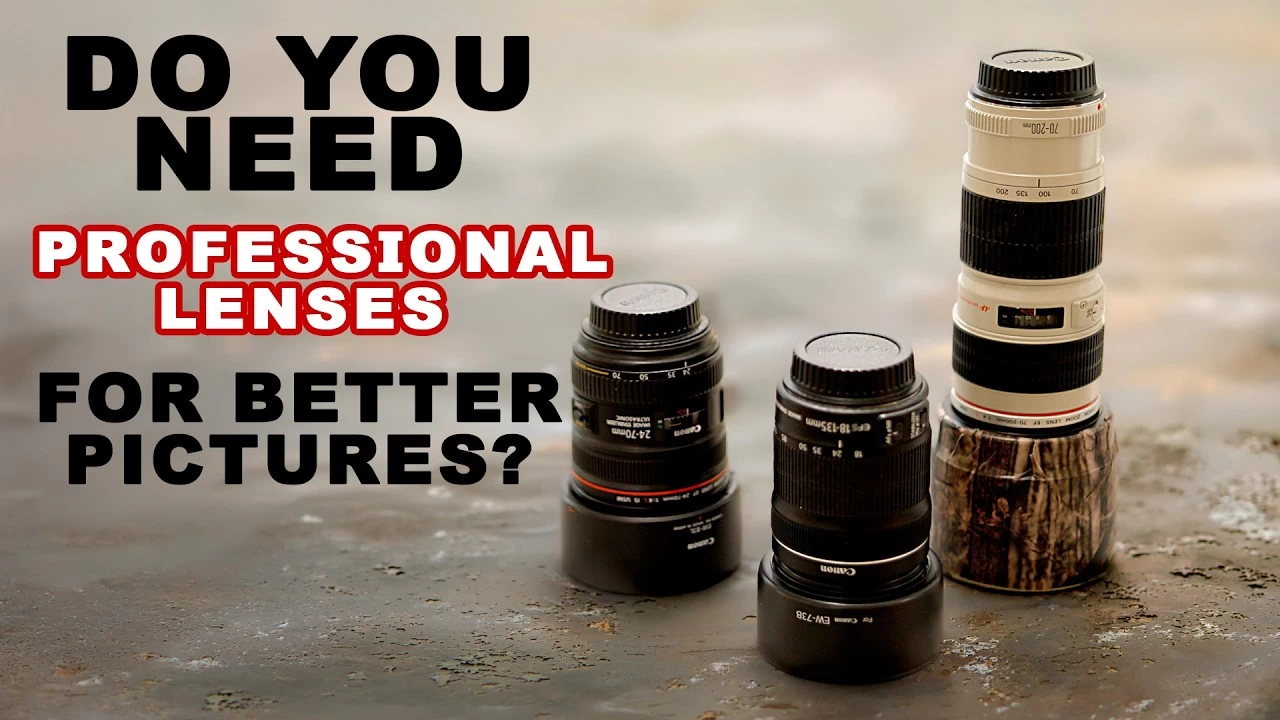
If you’ve ever looked at stunning images online and wondered whether they were created with expensive gear, you’re not alone. One of the most common questions photographers ask is whether upgrading to a professional lens will dramatically improve their results.
After more than four decades as a full-time professional photographer, I can confidently say this: great photos come from skill first, equipment second.
In this post, we’ll break down what professional lenses actually deliver, what they don’t, and how to get amazing results regardless of what lens you own. Plus at the end I have linked to a video I just did on the differences in professional lenses and standard lenses.

What a Professional Lens Really Gives You – Do You Need a Professional Lens for Great Photos
Professional lenses are designed to perform at a higher standard, especially in demanding conditions. But not every advantage translates into noticeably better photos for every photographer.
Sharper Images, But Only Sometimes
Yes, many pro lenses are optically sharper. However, the difference is often subtle.
Fixed Aperture Zoom Lenses
One hallmark of professional zoom lenses is a constant (fixed) aperture, such as f/2.8 throughout the zoom range.
Benefits include:
- Consistent exposure while zooming
- Better performance in low light
- More control over depth of field
- Improved autofocus performance
For event, wedding, and sports photographers, this feature can be invaluable.
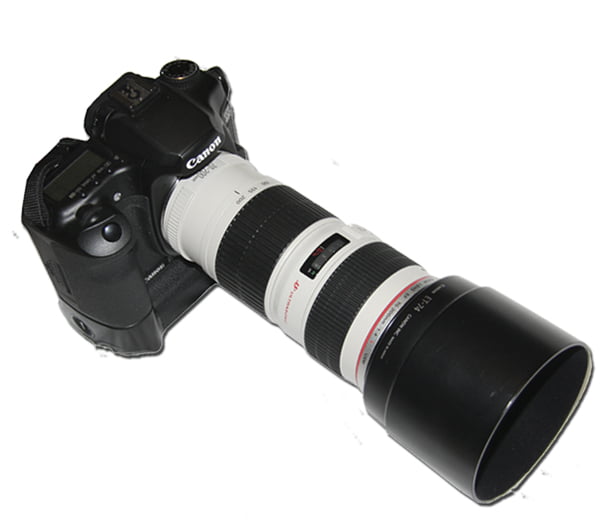
Large Aperture Lenses
Lenses with wide maximum apertures (like f/1.8, f/1.4, or f/1.2) allow more light into the camera and create strong background blur (bokeh).
Advantages:
- Excellent low-light capability
- Subject isolation
- Creamy background separation
- Faster shutter speeds indoors
However, large apertures also make focusing more critical, depth of field becomes razor thin.

Better Build Quality & Weather Sealing
Professional lenses are built to withstand heavy use and harsh environments.
Common features:
- Metal construction
- Weather sealing against dust and moisture
- Durable focus and zoom mechanisms
- Longer lifespan under professional workloads
For hobbyists who shoot occasionally, this durability may be unnecessary.
Faster, Quieter Autofocus
Pro lenses often feature advanced focusing motors that are:
- Faster for action photography
- More accurate
- Nearly silent (great for video)
- Better at tracking moving subjects
If you shoot sports, wildlife, or events, this can be a major advantage.
The Drawbacks of Professional Lenses
Upgrading isn’t always the best decision.
Higher Cost
Professional lenses can cost several times more than entry-level options. For many photographers, that money may be better spent on:
- Education or workshops
- Travel to inspiring locations
- Lighting equipment
- Printing and portfolio building
Increased Size and Weight
Pro lenses are often large and heavy, which can:
- Cause fatigue during long shoots
- Make travel more difficult
- Discourage casual shooting
- Require sturdier tripods
Sometimes the best camera is the one you’re willing to carry.
Final Thoughts – Do You Need a Professional Lens for Great Photos
Professional lenses are powerful tools — but they are not magic. The real key to better photography is developing your eye, your understanding of light, and your technical skills.
Upgrade your lens when it solves a specific problem, not simply because it’s labeled “professional.”
Great photos don’t come from better gear alone.
They come from better photographers.
If you’ve ever wondered whether equipment or technique matters more watch this video I did:
Do you need a professional lens to get great pictures?