Astrophotography Made Simple: Keep Your Stars Sharp
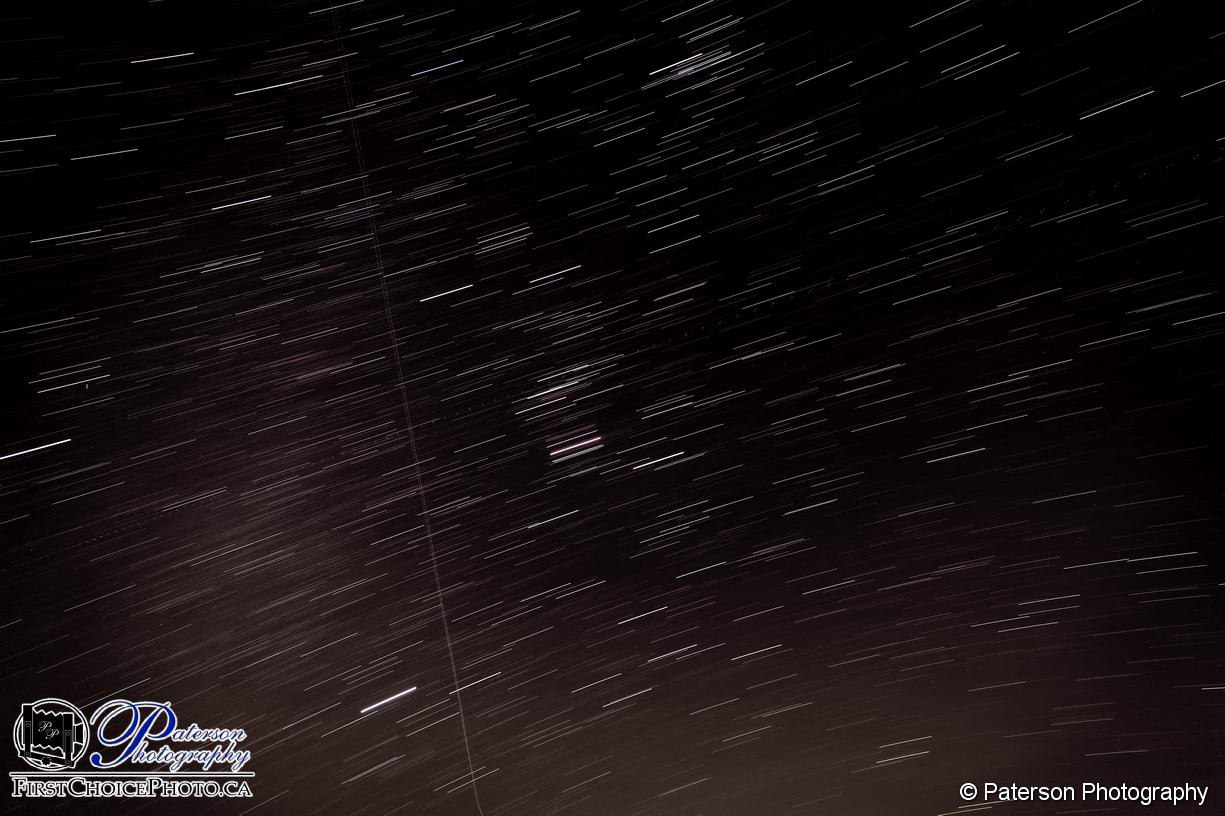
If you’ve ever tried astrophotography, or dreamed of capturing the night sky, you’ve probably run into the same challenge: star trails. That’s those little streaks you see when stars appear to move across your frame during a long exposure, making your photo look blurry or soft. The same applies when photographing the Northern Lights.
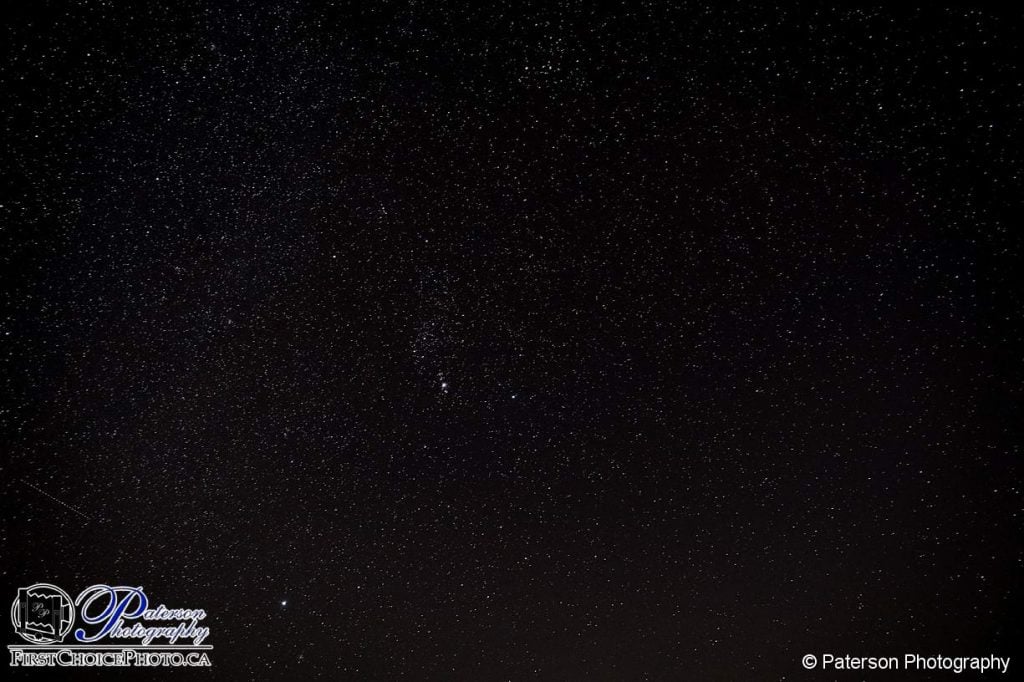
The good news? There’s a simple rule that helps you avoid this and keep your stars sharp.
The Astrophotography Rule
Take the focal length of your lens (in millimeters) and divide it into either 500 or 600.
The result tells you the maximum number of seconds you can expose your shot before stars start to trail.
Example:
- Using a 24mm lens → 600 ÷ 24 = 25 seconds max exposure
500 vs. 600 – Which Should You Use?
For years, I’ve relied on the 600 rule and been very happy with the results. Recently, I tested extreme magnifications and noticed tiny movements in my stars, which led me to experiment with the 500 rule for slightly sharper results.
The difference isn’t huge, so the best approach is to try both and see which fits your style of astrophotography.
All Things Equal – Key Considerations
This rule works best when:
- You’re shooting with a steady tripod.
- Your ISO is set correctly for night photography.
With these conditions, this guideline gives you a solid starting point for balancing sharp stars with longer exposures.
Pro tip: Always calculate using the 35mm equivalent focal length of your lens.
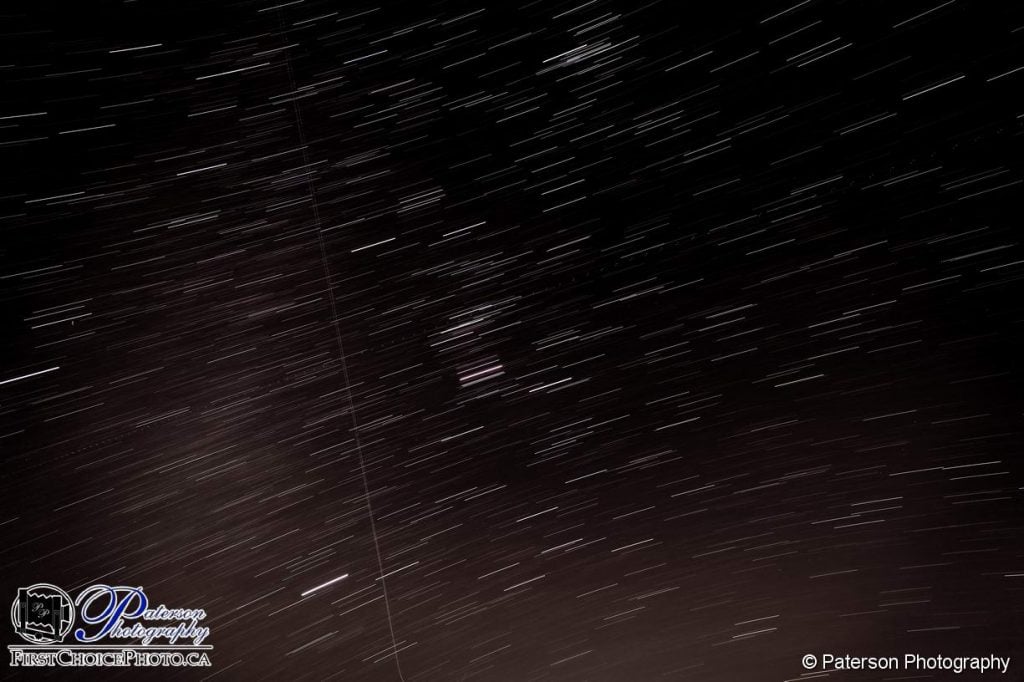
How It Works
Full-Frame Cameras
Applying the rule is straightforward:
- 50mm lens → 600 ÷ 50 = 12 seconds
- 24mm lens → 600 ÷ 24 = 25 seconds
These numbers tell you how long you can expose before star trails start to appear.
APS-C Sensors
If your camera has an APS-C sensor, factor in the crop conversion (usually 1.6×). Multiply your lens focal length by the crop factor before applying the rule.
Example with a 50mm lens:
- 50 × 1.6 = 80mm equivalent
- 600 ÷ 80 = 7.5 seconds → Round to about 8 seconds
Example with a 24mm lens:
- 24 × 1.6 = 38.4mm equivalent
- 600 ÷ 38.4 = 15 seconds → You can expose for about 15 seconds
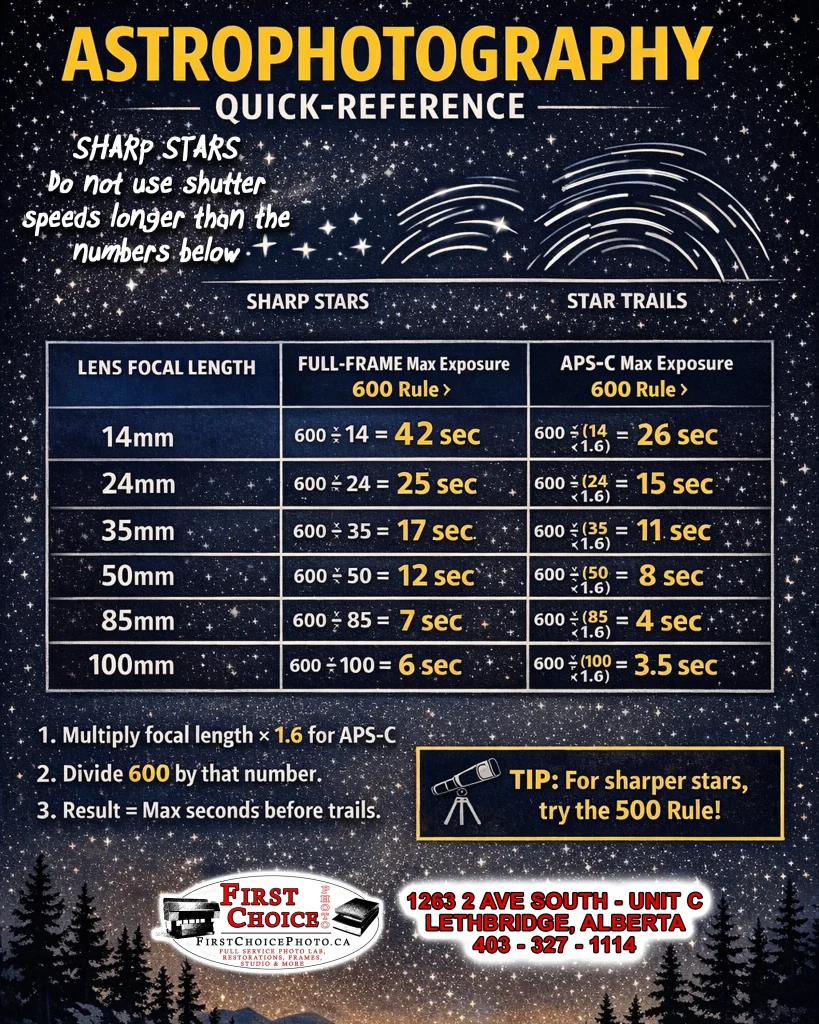
The Astrophotography cheat sheet
By following this simple rule, you can confidently capture stunning night skies with sharp, twinkling stars—and spend less time worrying about unwanted trails.
Click on the image below to download an Astrophotography cheat sheet or click on this link – it is free and no sign up https://www.firstchoicephoto.ca/Astrophotography.pdf